Smart Casual Dress Code for Men: Polished, Relaxed, Right for the Room

9 min readLast updated: October 8, 2026
Smart casual is the dress code between weekend clothes and business wear: polished but relaxed, no suit and usually no tie. For men, that means a collared shirt or fine knit, chinos, wool pants or dark jeans, plus leather shoes or clean leather sneakers; a blazer is optional. You'll see it on invitations to dinners, happy hours, private parties and in creative offices.
Snap a photo of each piece once and see which smart casual outfits are already hanging in your closet. See the app
Smart casual blends everyday clothes with classic menswear
Smart casual is a dress code that mixes everyday clothing with pieces from classic menswear. The Cambridge Dictionary defines smart casual clothing as neat and stylish without being too formal, especially when that is the accepted way of dressing for a particular situation, place or social occasion. Its example sentence is telling: “The restaurant’s dress code is smart casual.”
For men, smart casual comes down to a simple picture: a collared shirt or fine knit, well-kept pants, leather shoes or clean leather sneakers. A blazer raises the level, but it is rarely required. The suit and the tie stay home.
The earliest recorded use is American, and older than most people think. According to Wikipedia’s entry on smart casual, “smart casual appearance” first showed up in May 1924 in The Davenport Democrat And Leader, a newspaper in Iowa, describing women’s dresses. A hundred years later there is still no binding definition. That is exactly why the phrase on an invitation makes so many men stop and think.
Why smart casual feels harder in the US
American workplaces have already moved far toward casual clothing. In a 2023 Gallup poll, 41% of U.S. workers said they typically wear business casual on the job and 31% wear casual street clothes. Only 3% wear business professional attire. Among men, Gallup found the split roughly even, at about a third each, between business casual, street clothes and uniforms.
The consequence for smart casual: If your everyday office look is already chinos and a polo, a smart casual invitation asks you to step up. Treat it as the evening version of your best workday outfit, with more texture and more personality.
My rule of thumb: two classic pieces, one relaxed piece at most
Since nobody owns the definition, I use a simple count. A smart casual outfit for men combines at least two pieces from classic menswear with no more than one relaxed piece. That keeps the overall impression polished, and the relaxed piece supplies the ease.
- Classic pieces: blazer or sport coat, collared shirt, fine merino or cashmere knit, wool pants, leather shoes such as loafers, derbies or Chelsea boots.
- Relaxed pieces: jeans, T-shirt, piqué polo, overshirt, leather sneakers.
- Swing piece: Chinos count as either. Pressed, slim and in a muted color, they read classic. Wrinkled and loose, they read relaxed.
Three examples show how the count works:
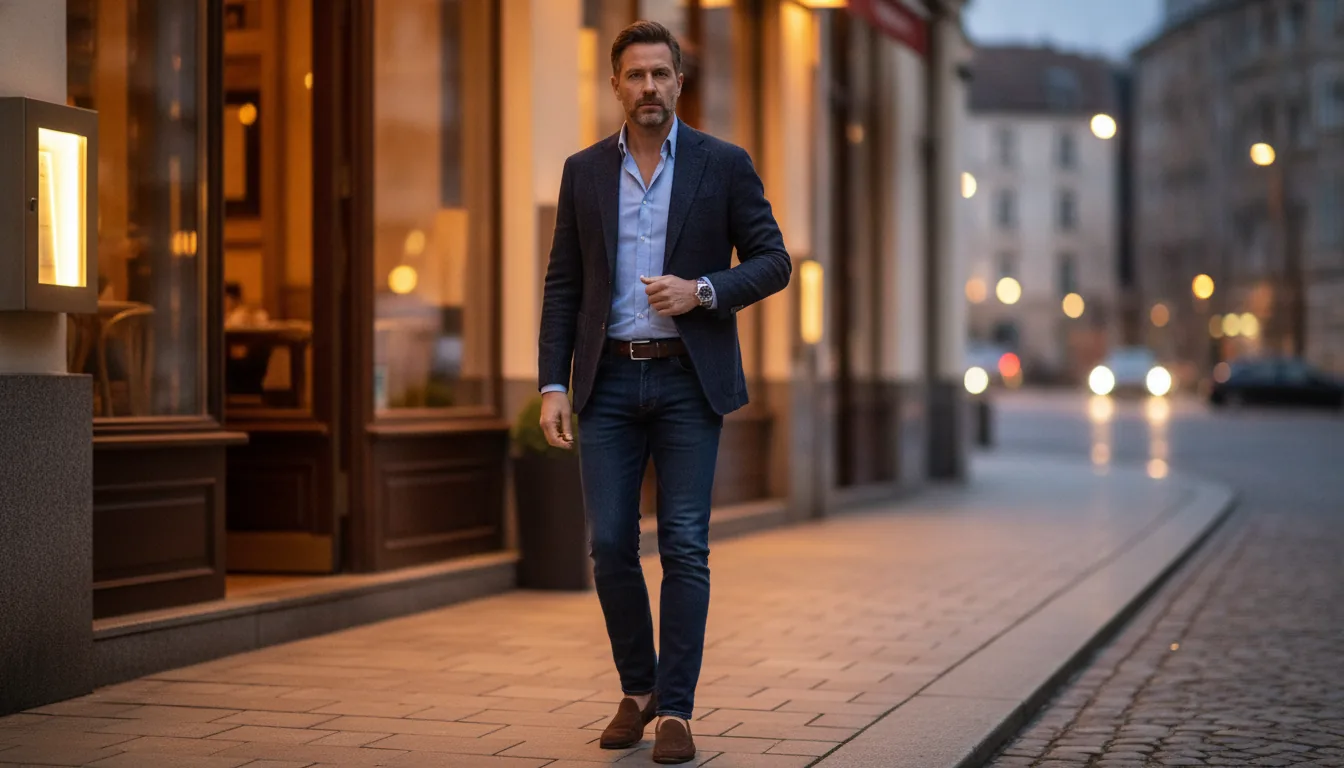
- Blazer, oxford shirt, dark jeans, loafers: Three classic pieces, one relaxed. Textbook smart casual.
- Merino sweater, chinos, white leather sneakers: Two classic pieces, one relaxed. Right for happy hour or a friend’s dinner party.
- T-shirt, jeans, sneakers: Zero classic pieces. That is casual, and for most smart casual events it falls short.
Six occasions where smart casual is the default
The dress code is rarely printed in bold. More often the situation implies it. Six occasions typically call for smart casual:
- Dinner at an upscale restaurant or hotel restaurant
- Happy hour with colleagues or clients
- Private invitations such as birthday dinners, house parties or brunch
- Company events in the evening, from summer parties to holiday parties without a suit requirement
- Workdays in creative offices, agencies and startups
- Evenings on business trips, from the hotel bar to dinner with a client
Formal and informal smart casual: Read the invitation first
The British etiquette authority Debrett’s reads smart casual as a request from the host: Make an effort and skip everyday leisure clothes such as trainers, jogging pants, sweatshirts, hoodies, beachwear and flip-flops. Debrett’s names four things to weigh before you choose: the invitation, the venue, the time of day and the nature of the event. A printed invitation, it notes, usually signals the formal end of the spectrum.
Debrett’s then splits the dress code into two versions, and that split clears up most doubts.
Formal smart casual fits restaurants, hotels, company evenings and printed invitations. For men, Debrett’s recommends a jacket or blazer with chinos or tailored trousers and an open-necked shirt with a collar. A tie is generally not necessary. On your feet: loafers, brogues or lace-ups, no trainers or sandals. A sweater is fine when it’s cold.
Informal smart casual sits close to everyday clothing. Debrett’s sets a simple rule for it: Change your clothes for the event and wear only freshly laundered pieces from the smarter end of your wardrobe. Jeans work when they are dark, clean and well fitted. A polo or a printed shirt beats a collarless T-shirt, and a plain black or white T-shirt works under a jacket. Smart sneakers or boat shoes are fine.
In practice: a restaurant, a hotel or a printed card means formal smart casual. A backyard cookout, brunch at a friend’s place or drinks after work means informal smart casual.
Smart casual vs. business casual: The occasion decides
The two terms get mixed up constantly. Wikipedia notes that the line between them is disputed. The Emily Post Institute, a leading American etiquette authority, separates Casual, Dressy Casual and Business Casual in its attire guide. For Dressy Casual it lists a seasonal sport coat or blazer with slacks and a dress shirt, casual button-down, open-collar or polo shirt. That is very close to what most American hosts mean by smart casual.
The clearest line for your calendar runs along the occasion. Smart casual is for social and evening events with a style standard. Business casual is the office dress code one step below the suit.
| Element | Smart casual | Business casual |
|---|---|---|
| Typical occasion | dinner, happy hour, party, creative office | office day, client meeting without suit requirement |
| Impression | polished, personal, relaxed | competent, credible, approachable |
| Top | collared shirt, knit polo, fine sweater, quality tee under a blazer | collared shirt, fine knit |
| Pants | chinos, wool pants, dark jeans | chinos, dress pants, wool pants |
| Blazer | optional | expected or within reach |
| Jeans | dark and clean, works | depends on the company, less common |
| Shoes | loafers, derbies, Chelsea boots, leather sneakers | derbies, loafers, brogues |
| Color and pattern | bolder: earth tones, texture, one accent color | calm: navy, gray, white, light blue |
In short: Smart casual lets you show more personality. You should look like a man who dressed for this specific evening.
The building blocks of a smart casual outfit for men
A smart casual outfit has five building blocks: top, pants, jacket, shoes and accessories. Each block has a safe pick and a more relaxed option.
Tops with a collar or texture
The oxford button-down is the most versatile smart casual top. Its slightly coarser weave looks more relaxed than a smooth dress shirt, and with an open collar it works with jeans and wool pants alike. A knit polo, a fine merino sweater or a thin turtleneck do the job just as well. A T-shirt works when it’s heavyweight cotton, sits close at the neck and goes under a blazer.
Pants: chinos, wool pants or dark jeans
Three pairs of pants cover nearly every smart casual occasion. Chinos in khaki, olive or navy are the all-rounder. Wool pants in gray or brown make any outfit a notch dressier. Dark jeans in a slim, straight cut are the most relaxed option. Pick a pair without fading, rips or frayed hems, with a length that just touches the top of your shoe.
The blazer is your wild card
A blazer is usually optional at smart casual events, and it is still your biggest lever. The best choice is an unstructured blazer without shoulder pads or a stiff canvas. It drapes softly and looks as good over a knit polo as over an oxford shirt. In cooler months, tweed, flannel and corduroy fit the mood; in summer, linen or a light wool blend takes over.
Shoes decide between smart and casual
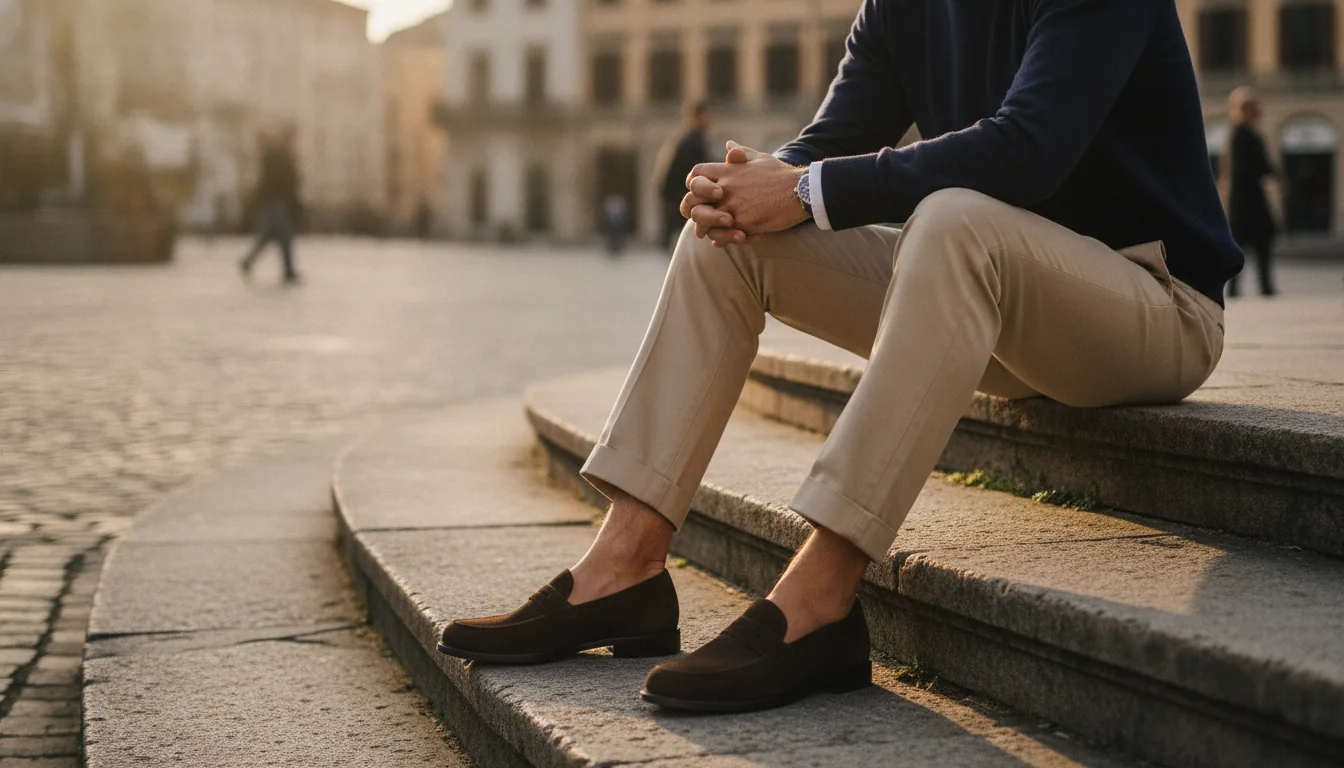
Your shoes show fastest which side of the dress code you’re on. Suede loafers, brown derbies and Chelsea boots are the safe smart casual picks. Minimal leather sneakers in white, gray or navy work at happy hour, house parties and in creative offices. Running shoes, chunky soles and big logos pull the outfit back into weekend territory.
Accessories add the finish
Three rules are enough for men. Your belt matches your shoes. Your watch is simple, on a leather strap or a steel bracelet. A pocket square in your blazer is an option when it sits loosely and doesn’t match your shirt exactly.
Smart casual do’s and don’ts at a glance
The table sums up the key decisions. The left column is the safe call, the right column shows what misses the dress code.
| Building block | Do | Don’t |
|---|---|---|
| Shirt | oxford button-down, linen shirt, open collar | dress shirt with tie, short sleeves with tie |
| Knitwear | merino sweater, knit polo, fine turtleneck | hoodie, graphic sweatshirt |
| T-shirt | solid color, heavy fabric, under a blazer | slogans, logos, stretched-out collar |
| Pants | chinos, wool pants, dark jeans | sweatpants, cargo pants, ripped jeans |
| Blazer | unstructured, wool, linen, corduroy | shiny suit jacket worn as a separate |
| Shoes | loafers, derbies, Chelsea boots, leather sneakers | running shoes, sandals, flip-flops |
| Belt | leather in the shoe color | canvas belt with a big logo buckle |
| Fit | blazer fits at the shoulders, pants end at the shoe | oversized cuts, sleeves too long |
The scale shows the logic behind every dress code: Each step to the right adds classic pieces. Smart casual is the first level where a collar, leather shoes and structure define the outfit.
Six smart casual outfits for men
These six outfits cover the typical occasions. Each one uses pieces that already hang in a well-stocked man’s closet.
Restaurant dinner: blazer, oxford shirt, wool pants
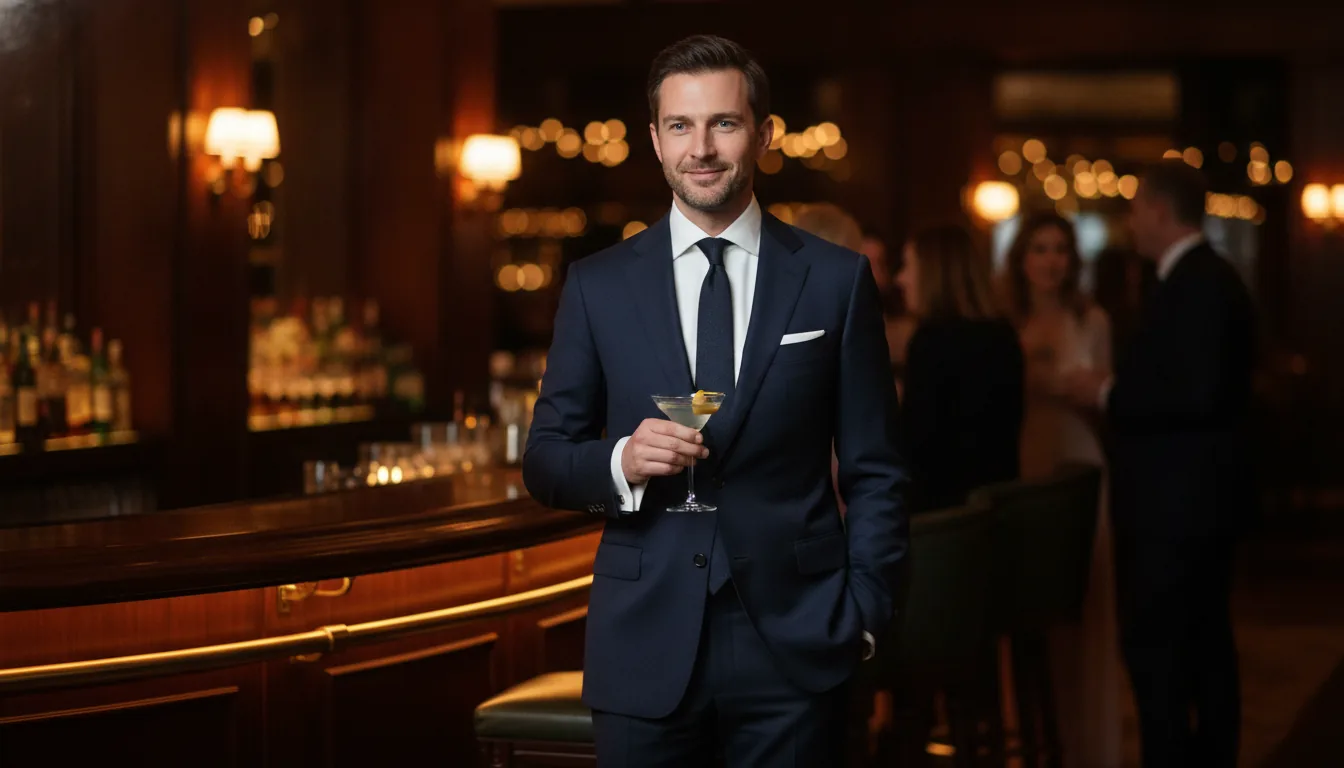
An upscale dinner is the most formal smart casual occasion. Wear a navy blazer, a white or light blue oxford shirt with an open collar, gray wool pants and brown suede loafers. For a darker evening look, swap the shirt for a fine charcoal turtleneck. This outfit clears any restaurant that asks for smart casual.
Happy hour: sweater over a shirt, chinos, leather sneakers
Happy hour usually starts straight from the office. Drop the blazer, pull a navy merino sweater over your shirt and let the collar show. Add khaki chinos and white leather sneakers you keep under your desk. That takes you from workday to evening in two minutes.
Dinner party at a friend’s place: knit polo, dark jeans, loafers
A private invitation calls for polish with ease. A knit polo in bottle green or rust, dark jeans and loafers, sockless in summer and with fine socks in winter. If the invitation came on a printed card, add an unstructured blazer.
Summer party or company event: linen blazer, polo, chinos
Outdoor events call for lightness. A blazer in linen or a linen blend in sand or light blue, a polo or linen shirt underneath, white or khaki chinos and suede loafers. Linen wrinkles, and that’s part of the look.
Workday in a creative office: overshirt, tee, chinos
In agencies and startups, smart casual is often the everyday standard. A wool or heavy cotton overshirt over a good T-shirt, olive chinos, leather sneakers or Chelsea boots. When you have a pitch at a client’s office, swap the overshirt for a blazer.
Evening on a business trip: one blazer, two outfits
On the road, every piece works double shifts. The blazer you wear to the morning meeting goes with dark jeans and a sweater at night. For how to fit those pieces into one carry-on, see the business trip packing list.
Smart casual in summer and winter
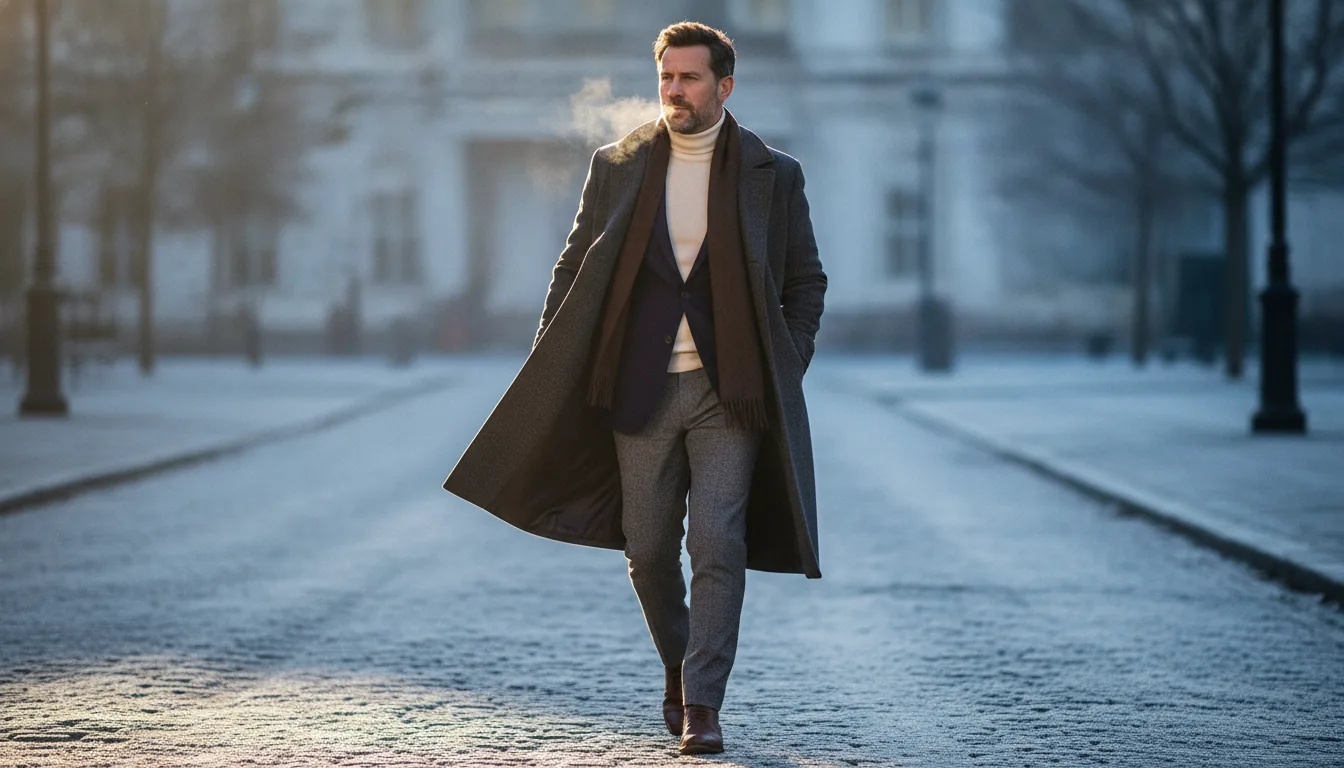
The season changes the fabrics, and the rules stay the same. For winter, Debrett’s gives a clear tip: Outdoors, wear an overcoat over your outfit; an anorak or parka doesn’t go with it. Your outer layer counts, because it is the first thing your host sees.
| Building block | Summer | Winter |
|---|---|---|
| Blazer | linen, seersucker, light wool | tweed, flannel, corduroy |
| Top | linen shirt, knit polo, polo | turtleneck, merino, flannel shirt |
| Pants | light chinos, linen pants | wool pants, corduroys, dark jeans |
| Shoes | suede loafers, leather sneakers | Chelsea boots, derbies with rubber soles |
| Outer layer | light field jacket | wool overcoat, peacoat |
Four mistakes that tip a smart casual outfit
Most smart casual mistakes happen at the edges of the dress code: An outfit drifts too office or too gym. Four mistakes come up most often.
- A dress shirt and tie with jeans. It looks like you came straight from work and only lost the suit jacket. An open collar and a shirt with texture work better.
- Running shoes or chunky sneakers. Athletic shoes belong to weekend wear. Leather sneakers need to be minimal and clean.
- Faded or ripped jeans. Smart casual only works with dark, evenly dyed denim.
- A sloppy fit. A relaxed dress code still punishes oversized cuts. A blazer that fits at the shoulders and pants that end at the shoe look more expensive than any logo.
Plan smart casual outfits from your own closet
Most men already own every piece smart casual needs. The hard part is the moment before: Friday, 6:30 p.m., dinner at eight, and the question of which combination works tonight. You can make that decision days earlier.
In the AI outfit planner maiasa, you take one photo of each piece, and the AI recognizes and sorts it into your digital closet. A large AI language model, Google Gemini 3, then curates an outfit every day from the pieces you own, matched to your style and the weather. You can plan outfits days ahead. If you know on Monday that Friday means dinner with clients, lock in the outfit now and see right away whether that shirt needs a trip to the cleaners.
Full disclosure: I built maiasa myself. The app is developed in Germany and is GDPR compliant. The free version includes every feature; the only limit is swiping, at one outfit suggestion per day. Premium with unlimited suggestions comes with a 7-day free trial. If you want to cut your closet down to a set of pieces that all work together first, the guide to the capsule wardrobe for men shows you how.
The bottom line: Smart casual means two classic pieces and one relaxed piece at most. Read the invitation, choose your shoes on purpose and, when in doubt, bring the blazer.
Frequently asked questions
What does smart casual mean for men?
Smart casual combines everyday clothes with pieces from classic menswear. Typical choices are a collared shirt or fine knit, chinos, wool pants or dark jeans, and loafers, derbies or clean leather sneakers. A blazer elevates the look, while a suit and tie are usually too formal.
Can you wear jeans for smart casual?
Yes. Dark, slim, straight-leg jeans without rips or heavy fading work for most smart casual events. Pair them with at least two classic pieces, such as an oxford shirt and leather loafers. For a formal evening invitation, chinos or wool pants are the safer choice.
Are sneakers smart casual?
Minimal leather sneakers in white, gray or navy are smart casual at happy hours, house parties and creative offices. Running shoes, chunky soles and big logos read as weekend wear. For an upscale dinner, loafers or derbies are the better choice.
Do you need a blazer for smart casual?
A blazer is usually optional for smart casual. At restaurant dinners, hotel events and company parties it lifts the outfit noticeably. If you're unsure, wear one: You can always take it off.
What is the difference between smart casual and business casual?
Smart casual is a dress code for social and evening events with a style standard, while business casual is the everyday office dress code one step below a suit. Smart casual allows more room for dark jeans, sneakers and bolder colors. Business casual centers on a collared shirt, dress pants or chinos and a blazer within reach.
Sources
- Cambridge University Press: smart casual, Cambridge Dictionary, accessed October 2, 2026
- The Emily Post Institute: Attire Guide: Dress Codes from Casual to White Tie, Emily Post, accessed October 2, 2026
- Debrett's: Addressing the Dress Code, Debrett's, accessed October 2, 2026
- Megan Brenan: Casual Work Attire Is the Norm for U.S. Workers, Gallup, September 8, 2023
- Wikipedia contributors: Smart casual, Wikipedia, accessed October 2, 2026
All links checked on October 8, 2026.